BLOG 7 – Sexual Violence Campaigns

#METOO

The ‘me too.’ movement was founded in 2006 to help survivors of sexual violence, particularly Black women and girls, and other young women of colour from low wealth communities, find pathways to healing. Their vision from the beginning was to address survivors of sexual violence and to build a community of advocates, driven by survivors, to interrupt sexual violence in their communities. The goal of the Me Too Movement is also to reframe and expand the global conversation around sexual violence to speak to the needs of a broader spectrum of survivors. Young people, queer, trans, and disabled folks, Black women and girls, and all communities of colour. The members of the movement want perpetrators to be held accountable and we want strategies implemented to sustain long term, systemic change.

This movement was founded by Civil Rights Activist Tarana Burke in 2006. Tarana Burke was born September 12, 1973 in The Bronx, NY. She is an African-American civil rights activist. In 2017 Burke and other influential female activists were named “the silence breakers” by Time magazine. She currently serves at the Girls for Gender Equity in Brooklyn as its senior director. 

Tarana Burke originally coined the phrase “me too” while working at Just Be Inc., a nonprofit she founded in 2003 that focused on the overall well-being of young women of color. Burke was talking with a girl who revealed that her mother’s boyfriend had been sexually abusing her. Burke was left searching for the right words to help empathize with the countless women and young girls who have disclosed their experiences to her. Ever since, Burke has shared the message with survivors everywhere: “You’re not alone. This happened to me too.” From this point forward, “me too” helped Burke shape her life-long campaign for activism to help girls and women who have experienced sexual harassment, abuse, or assault.


#TIME’SUP

” The clock has run out on sexual assault, harassement and inequality in the workplace. It’s time do to something about it.

More than 300 women in film, television and theater joined together to forge TIME’S UP, a “unified call for change from women in entertainment for women everywhere.” Led by women, TIME’S UP not only aims to raise awareness of sexual harassment across industries, but also to provide the tools to systematically eliminate it. Partnering with advocates for equality and safety, the effort strives to “improve laws, employment agreements, and corporate policies

The initiative–announced in the New York Times on January 1, 2018 and proudly displayed on t-shirts and pins in the following weeks–is a rallying cry to address the systematic inequality and injustice that keeps underrepresented groups from reaching their full potential.

In November 2017, the Alianza Nacional de Campesinas wrote a letter of solidarity to the Hollywood women involved in exposing the sexual abuse allegations against Harvey Weinstein. The letter, published in Time described experiences of assault and harassement among female farmworkers. The letter stated that it was written on behalf of the approximately 700,000 female farmworkers in the United States.

Artists, executives, producers and other leaders came together to talk about what we could do to prevent abuse and ensure equity for working women. They started exploring what we could do to immediately protect women in our industry. As they grappled with the reality that 80 to 90 percent of leadership in our industry was male—and largely composed of white men—They realized systemic change was necessary. They broke into groups to work on addressing different issues, which led to working groups focusing on issues like safety, equity and power
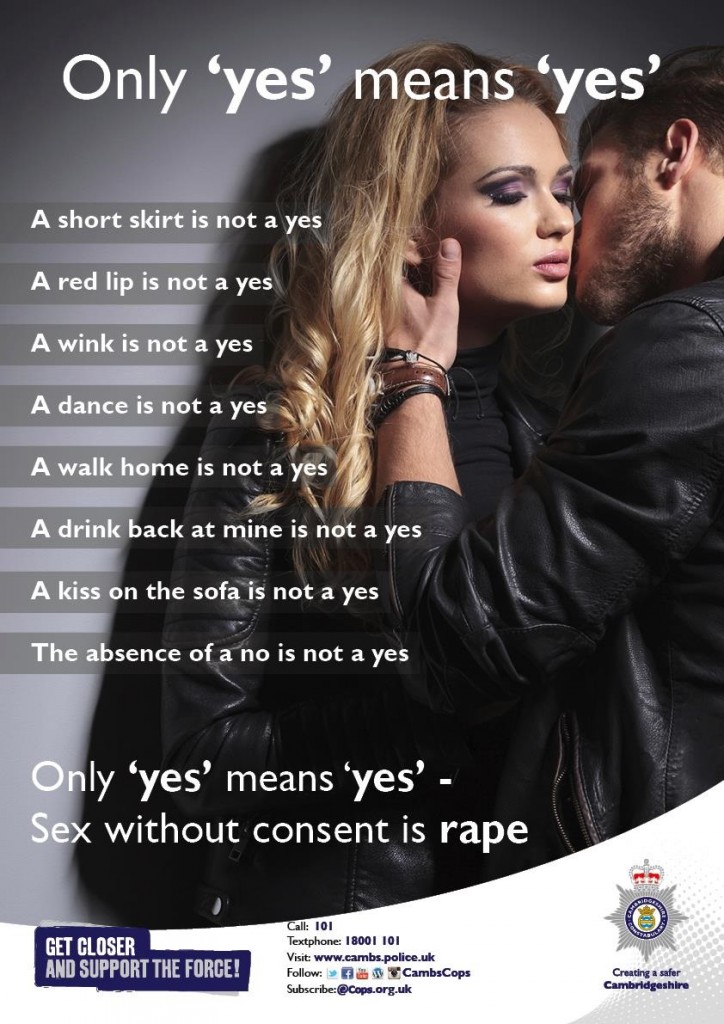
Rape Culture: Society is Created Collectively, Not by Other Individuals

Vanier’s new Sexual Violence Prevention & Response Official Policy & Procedural Document adresses an issue that has long existed. Their intentions are to train employees and students member of the Vanier College Students Association to prevent sexual violence. And they are right: education is the fist step to take. On the other hand, prevention regarding Vanier students is not mentionned, as if girls can keep holding their keys for protection in the streets because all students can be raped as long as no trained teacher is aware. Sorry not sorry Vanier, I respect the effort.

Maybe Vanier is right not to consider itself responsible for our education, some groups are already considering the urgency to sensibilize the youge population.


https://www.youtube.com/watch?v=5gEftWCG5Ow

The message of this video is clear: you would recognize rape if you could see yourself in action. I believe it is effective because it is shocking, short and adressing rape explicitely. It may be a little bit too effective, scenes are showing rape straight foward. Very different from the strawberries and the grapes viewed last class.

Yes. Yes. Yes. You are right.

What I like about the ad is that they recognize the absence of a no does not mean yes. Different from the video, consent is not absent only if the girl says no, it is absent as long as you have not clearly asked if it was okay to go further. It also clearly identifies no consented action can justify consent for later sex. I is a good idea to present things like this, because survivors can know they are not guilty of being raped. On the other hand, this ad is not gender neutral, red lips and short skirts identify the woman as victim, which I think is not enough inclusive. The consent has to come from both sides, regardless of the gender.

Finally, even effective ads sometimes promote preconceived ideas about rape. The main quality of those are: their shortness and their directness.

Blog 7: Sexual Assault Campagin

The first campaign that I’ve found is “It’s On Us”, which focuses on ending sexual assault. They want to reach out students, community leaders, parents, organizations, and companies in order to make change. They have a campus organizing program where they’ve educated and trained almost 5,000 student leaders. Their specific goal for this year is to get their message across to 1000 campuses. They have many tools. They have a survivor hotline, t-shirts to spread the word, a bystander intervention tip sheet and even a “Fall Campus Organizing Toolkit” you can download.

Below is one of the videos they made for their campaign which I found very interesting:

I think using messages to get their on message across is very effective because it appeals to our generation, and I think this exact scenario happens quite often. I feel like when people hear the term “bystander” it only refers to actually seeing something in person, but this is a classic example of how you can very much be a bystander over text, and it’s still your role to not ignore the “submessage”, like the video states.

Regarding other campaigns that I’ve found, the Avalon Sexual Assault Centre is actually responsible for a lot of them. They are a feminist organization that want to eliminate sexual assault as well as change our current socio-political culture that promotes various forms of oppression such as sexism and social injustice. Two of their current campaigns are “I Don’t Owe You” and “Start By Believing”.

“I Don’t Owe You” addresses rape culture by highlighting issues of consent and entitlement. Their message is that just because you do something for someone, it doesn’t mean that they are entitled to your body and you owe them sex. They make several posters of common situations. Here is an example:

Poster-1-page-001-1

Another one of their current campaigns is “Start By Believing”, which focuses on creating a supporting and loving community that responds appropriately to sexual assault survivors. They have many resources, or rather “kits”, available on their website, http://avaloncentre.ca/, that help you respond to and empathize with survivors of sexual assault.  Here is a poster for this campaign:

Women-small-1


Blog 7: Sexual Violence #METOO

Is a campaign about sexual violence that was founded by Tarana Burke, but only became a phenomenon in October 2017, after actress Alyssa Milano shared her story about getting sexually abused. This phenomenon became a huge success, it had over 19 million hashtags, and a large amount of celebrities were revealing their story of sexual assault. Not only did this movement expose the Hollywood industry behind the scenes, but it also spread worldwide. This campaign was not only supporting one specific culture, but it was supporting all cultures of females who have been impacted by sexual assault but felt shameful to speak up. This also shed a light on how the industry is male dominant. For instance, one of the stories that really stood out to me was a young Bollywood actress explaining how she did not get a role because she would not let the producer touch her. This is a perfect example on how males exercise their power in this industry, in a negative way. Even though this campaign shed a negative light on male dominance, it still had a large amount of male supporters.

     The main reason why I chose this campaign was because I like how they shed a light on the South Asian culture. Speaking up about sexual assault is a very emotional and difficult thing to do, but it is especially difficult for women who are from a Southern Asian background. Reason for this is because if they speak up, they feel as if they are shaming their family. Especially since the majority of the time, these females are being sexually assaulted by someone they know, or a family member itself. I am not saying that sexual assault is harder for these women to go through, than women in other cultures, but from personal experience, I feel as if when the time comes to tell their family they struggle more due to their culture and religion. This is the reason why I chose to discuss this campaign; because it’s telling all women that they are equally important. It does not matter which race, ethnicity, or social status you are. Every female is important!

Second campaign: #IBELIEVEYOU

The #IBelieveYou campaign was first introduced in 2015 by the Association of Alberta Sexual Assault services. It is now being launched in Brandon University. This movement has over millions of supporters, since when it first started. This campaign is discussing a simple, but powerful message. That when someone opens up to you about their experience with sexual assault, just believe them. This is why majority of females do not open up about their own experiences, because not only do they get slut shamed, but they also get people who don’t believe them. In order to raise awareness to not only females, but all individuals, they have to know that they will be believed. That they will be heard, this does not mean having to say the right thing, but instead just give them a hug, show them you are listening, that you believe them. Actions speak louder than words!

blog 7: Sexual assault campaign

After looking at many online campaigns about sexual violence I chose my two favorites ones. First of all, I want to mention that I was really surprised of the amount of campaigns we can find online about sexual violence, but I felt like these campaigns where only there if someone takes the time to look for them. In fact, I feel like these types of videos should be ‘’advertised’’ way more often because it is very rare that while scrolling down on Facebook, Twitter, Or Instagram that we randomly see an important message about sexual violence. My first example, is the #IBelieveYou campaign from Brandon University. The thing that I love about this campaign is that it does not only focus on the victim but on the people around the victims, which I believe play an important role. The main message the Brandon University is trying to share is that when someone opens up about their sexual assault you have to believe them because that are more likely to come forward if people around them believe their story. The main objective it had was to increase the support of the public. They give many tips if a survivor decides to open up and share their story with you. It was one of the few campaigns that actually focuses on people around the victims and not only the victims themselves. I will put the link at the end where you can also watch the video that they made.

The second campaign that I found, and I liked is called the ‘’NoMore’’. Just by visiting their site, I found a lot more information about sexuak violence. For example, I learned that April is the month for sexual awareness. They also many statistics on their site and events. Furthermore, they have many campaigns on their site and they use many hashtags which I think is a better idea especially for the younger generation since media is the best way of sharing information nowadays. The link will be in the bottom for more information.


https://nomore.org/campaigns/

#IBelieveYou Campaign for Sexual Assault Awareness

Blog 7 Addressing Sexual Violence

#IBelieveYou campaign for sexual assault awareness & #SaySomething campaign

What made this campaign stand out compared to all the other campaigns is the harsh reality behind it. We live in a world where most of us are consumed by our phones. It was striking to me to see in the #saysomething videos, the text messages were written in a way you could connect with. Not necessarily connect with the exact situation but with the context because of the way the people spoke. The text messages were casual and didn’t seem scripted to a point that the scenario was unrealistic.

The third video (About Julie) delievered the most important message in my opinion that, “ It’s never the victims fault if someone sexually assaults them, the only one to blame is the perpetrator”. Women in particular get blamed because of the clothes they decide to wear. No piece of clothing is “asking for it “. This is quite frustrating, I understand this myself because in the past I dressed more “feminine/revealing“ and got more unwanted attention for it. It’s insane how differently people will treat you just based off appearances. However victims/survivors come in all shapes and sizes as do perpetrators. You can never know someone’s true intentions and never know who’s been hurt if you don’t #saysomething.

I found the second campaign quite appealing in comparison to the other movements I researched. What I mean by this is that the #IBelieveYou campaign Is a softer approach to sexual assault victims. Campaigns like this increase public support for survivors, it has been shown that higher public support leads to an increase in the reporting of sexual assault. The world we live in has an increasing amount of fake news and outlets such as social media make it easy to post information in seconds.

Social media can create unrealistic expectations and can influence people to act a certain way. In the YouTube video no one speaks , and there is text written on a few instances. There is only music playing in the background, this adds an emphasis on the tone of the video due to the fact that you read the text in your own voice which helps to put things in your perspective.

It is hard for survivors to share their story ,often times they don’t want to be seen as a victims. When you share what has happened to you people look at you differently. People often won’t report to the police cases of sexual assault because they do not want to talk about something they wished never happened in the first place. Survivors don’t want to relive the trauma that they have been trying to repress.

Everyone’s trying so hard to be perfect that sometimes we don’t allow ourselves to be vulnerable. What I am implying by this is, often we repress any kind of negative emotions because we don’t want to seem weak. What we want is to be as strong of a person that we have convinced everyone else we are.

We are all here living, hoping to be heard. Just telling someone you believe them has a bigger impact then you think.

-Stéphanie Mallick-Pilon

BLOG 6 – INTERNATIONAL WOMEN’S WEEK : SOPHIE LABELLE

On March 4th 2019, Vanier College had the opportunity of having Sophie Labelle as a speaker during the International Women’s Week. Sophie Labelle is a Canadian author, cartoonist, public speaker and transgender. She uses her comics to present not only her work but a message for transgender individuals. Most of her comics transgender people and how they are perceived in their everyday lives by other individuals.

 During the presentation, she really supported the fact that transgender people should not feel judged or ashamed of who they are and that they are allowed to be themselves no matter the circumstances.

Many will not feel good in their own skin, scared of being who they truly are. They might feel that way by fear of being judged, put aside and even rejected by their loved ones. It is are for people to understand transgendered individuals. She mentioned that her mom still think that she is going trough a phase and that eventually, she will come back to her ‘senses’ .She personally opened my eyes about something I never thought about. She also mentioned that, it already happened that transgender people were killed for just being that way. I understand that some people might not understand transgender people and might not even like the fact that they are the way they are but, they do not deserve to die for it and that is something I find discouraging. 

Sophie’s presentation was really interesting. I found her really real and she made the spectators really comfortable. I feel like she can relate to many people who have been in this situation and because of her, this might encourage, inspire and support others who could face challenges like that or that are facing it right now.

-A.C


–

Blog 7: Group Project

Mathilde Caille

This is a very short but powerful video aimed a teenagers to denounce rape. At the end it is written “If you could see yourself, would you see rape?” I find this sentence extremely powerful and allows the viewer to reflect on it. This video is directed to young men to make them realize that they must stop and reconsider their actions before pursuing them because sometimes on the moment, they do not realize the impacts of them and wether they are right or wrong.

#DearDaddy is one of my all time favourite advert denouncing rape culture and toxic masculinity. Throughout the 5min video it is possible to see the many actions accepted in society that lead to rape and gender-based violence. For example, this video denounces the way we educate the boys in our society. Being accepting towards sexist jokes, calling girls whores, cunts, slut “just for fun” to impress other boys, or blaming girls for being wasted. This video is addressed to our fathers in society to ask to change the way we raise our boys. It denounces passive by standers who laugh at jokes. Jokes that lead to men who think it is ok to rape women because they were never told they were wrong. This video also portrays a violent relationship to help people understand how a women in this situations feels. This video is very touching and I find it portrays the problem in society very well. Being born a girl is the greatest dangers of all and we must change that. The video adresses itself directly to a certain group which makes it a lot more personal and effective.

Lastly, here are drawings done by @drawingofdogs on instagram. This artists creates memes on social justice themes, including rape culture. I find that it is a unique way of denouncing social injustices. He uses animals or objects which lightens up the mood. It is a short, funny, and very accurate way of illustrating rape culture.

Blog 7: Campaigns Against Sexual Violence

The first campaign that I found really interesting was the “NO MORE” campaign.  Its goal is to end domestic violence and sexual assault by increasing awareness. They work with difference communities and non profit organizations aiming to prevent sexual assault in schools, homes and workplaces by using tools that are popular in todays society like social media and sports.  This campaign stands by five very important values which are; unity & collaboration, impact, inclusion, innovation and transparency.  This campaign in my opinion is very effective because it is not working with only one organization but instead is there for all those who want to put an end to domestic violence and sexual assault. I also find this campaign to be very appealing because they have sub campaigns like the “Stand Up, #DontStandBy” campaign which is a partnership they have with Uber which aims at showing the important of looking out for each other’s safety when going out with friends. This organization overall seems to inspire action and really help drive change. 

The second campaign that really caught my eye was the “It’s On Us” campaign.  This campaign was launched in September 2014 and its goal is to end sexual assault.  “It’s On Us” launched after the White House Task Force to Prevent Sexual Assault spoke about the importance to end sexual violence. Their goal is to get people to be a part of the solution.  The fact that this campaign has ninety five partners on over 500 campuses makes it very appealing. They have gotten over 300 000 people to take the pledge in two years which is absolutely incredible. They are all about recognizing, identifying, intervening and finally creating an environment where sexual assault is unacceptable and its survivors are supported.  I think that this campaign is very strong because it has been able to get the message across to so many people in such a small time frame and it continues to excel.


Blog 7: Effective campaigns against sexual violence


This sanitary pad was first put on a public street in Germany on March 8th International women’s day. Why this message is effective is not only because it attracted a lot of people and many others around the world went around putting sanitary pads with messages on the street. Why it is effective is because rape is disgusting but to some men a girl being on their period is more disgusting. A women being on her period is natural, rape isn’t. That goes to show we’re some people’s heads are at.

These two adds both deal with ththe fact a women being drunk is not an opportunity for you to rape her. When a rapisit claims to have been drunk or high it still isn’t an excuse to rape. The rapisists try to play the victim by saying they were not in the right state of mind, but that is not a justified reason. In the first image it is emotional effective because the women who gets raped mite get pregnant from it and she carries on the tragedity that happend to her that night. The second image is also effective because the red solo cup is used as a symbol of the “blame game”.